



burnout is a theological problem
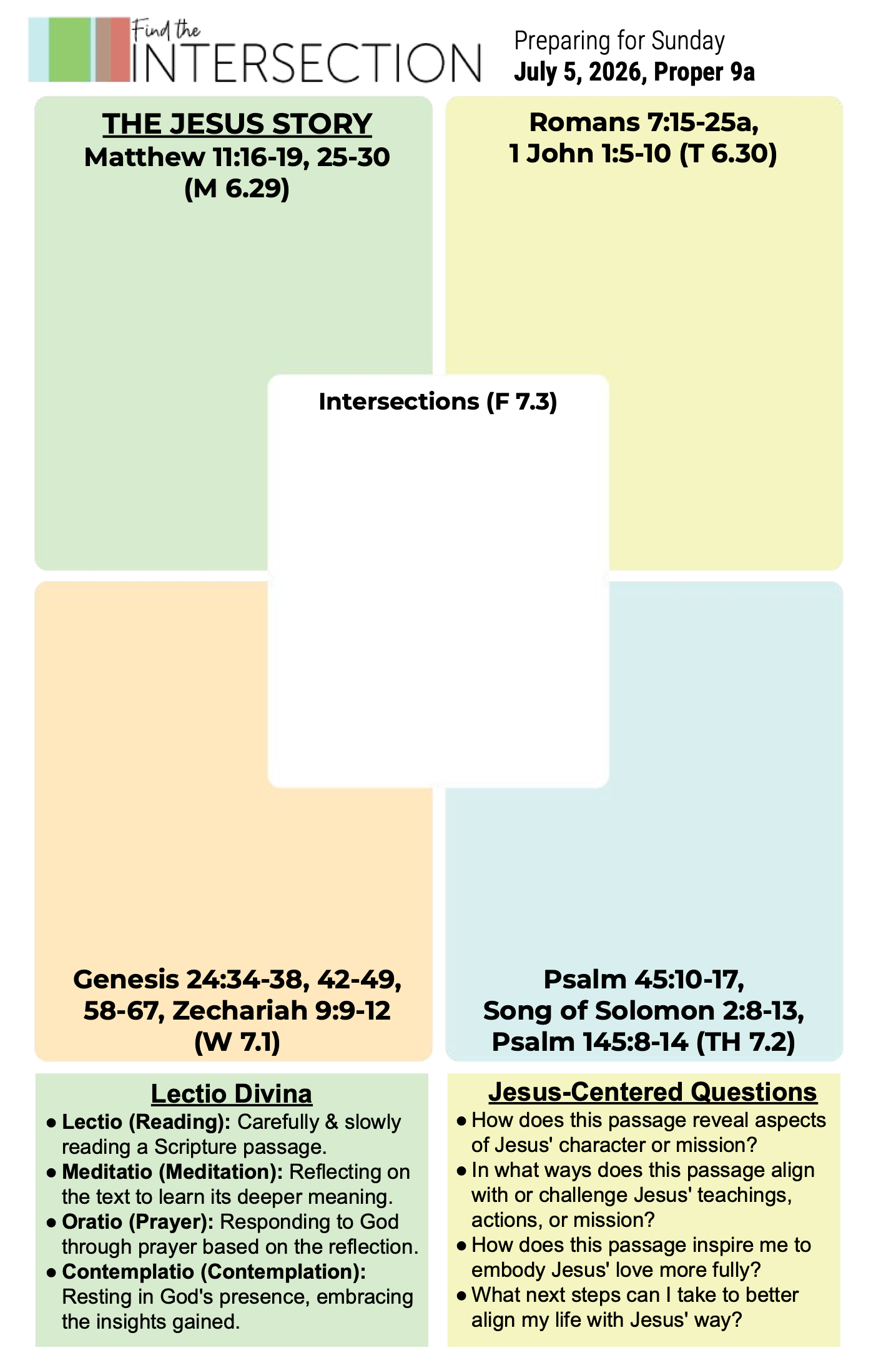
Monday 6.29.26 | Matthew 11:16-19, 25-30 | Proper 9A
Jesus looked at exhausted people and didn’t tell them to try harder.
Jesus invited them to come to him and find rest.
TL;DR: You’re exhausted because the yoke you’ve been carrying was never designed for you. Jesus sees that and says: come. The yoke he offers isn’t easier. It’s well-fitted. It matches your frame.
the game nobody wins
Jesus opens this passage with one of his challenging critiques.
“But to what will I compare this generation?
It is like children sitting in the marketplaces and calling to one another,
‘We played the flute for you, and you did not dance;
we wailed, and you did not mourn.’
— Matthew 11:16-17 (NRSVue)
In other words: nothing is ever right with this generation.
It’s a parable about a system that can’t be satisfied. John the Baptist showed up fasting and living in the wilderness, and they said he had a demon. Jesus showed up eating and drinking with the wrong people, and they called him a glutton and a drunk. The system demands performance and then moves the goalposts the moment you start to comply.
I don’t think Jesus is just describing first-century religion. He’s describing any system that makes you audition for belonging and then changes the criteria once you get close.
Social media does this. The news cycle does this. The church has done this, and work culture has perfected it. You show up, you do the thing, and the thing shifts underneath you. You’re never quite right. Never quite enough. Never performing at the level that would finally let you rest.
That kind of system needs you exhausted, because your exhaustion is what keeps it running.
That’s burnout. And it’s not a personal failure. It’s what happens when the system was designed to keep you chasing.
the actual qualification
Then Jesus does something unexpected. He stops critiquing and starts praying.
At that time Jesus said, “I thank you, Father, Lord of heaven and earth, because you have hidden these things from the wise and the intelligent and have revealed them to infants; yes, Father, for such was your gracious will.”
— Matthew 11:25-26 (NRSVue)
The Greek word for infants is nepioi. It means people who can’t speak for themselves yet. People without credentials or status or any kind of platform. The opposite of the people running the system.
Jesus isn’t anti-intellectual. He’s making a specific claim about where God shows up. The experts missed it because they were too busy managing the system to notice. The infants received it because they had nothing to protect. Their hands were already empty, which turned out to be exactly the right posture.
This should comfort anyone who has ever felt disqualified from God because they didn’t have the right education or the right composure or the right vocabulary to belong.
Jesus says the kingdom is revealed to the people who have stopped pretending they have it figured out. That’s the actual qualification.
custom fit
Then comes the invitation everyone knows, even if they’ve never opened a Bible.
“Come to me, all you who are weary and are carrying heavy burdens, and I will give you rest. Take my yoke upon you, and learn from me, for I am gentle and humble in heart, and you will find rest for your souls. For my yoke is easy, and my burden is light.”
— Matthew 11:28-30 (NRSVue)
The word for weary is kopian. It means worked to the point of collapse. Not tired after a long day. Broken by the labor itself. Paul uses this word to describe his own ministry. It’s the word for someone whose body has been ground down by what the system demanded of them.
We have a modern word for what kopian describes. We call it burnout.
Jesus saw it two thousand years before we gave it a name. Eugene Peterson saw it too. His paraphrase in The Message opens with:
“Are you tired? Worn out? Burned out on religion? Come to me. Get away with me and you’ll recover your life.”
Jesus sees those people and says: come. Then he says: “Take my yoke upon you, and learn from me.”
There are three things happening in that sentence, and we usually only hear one of them.
First, “yoke” was a rabbinic term. When a rabbi said “take my yoke,” he meant: learn my teaching, follow my way of understanding God and living in the world. The Pharisees had a yoke too.
Jesus is offering an alternative. My teaching instead of theirs. My way instead of the one that crushed you.
Second, a yoke is built for two. It joins two animals together to share the load. When Jesus says take my yoke, he’s saying: I’m already in the harness. Walk with me. Work with me.
Peterson translates it, “Walk with me and work with me, watch how I do it.” You’re not carrying this alone. Jesus is on the other side of the yoke, bearing the weight you can’t.
Third, Jesus says his yoke is “easy.” The word is chrestos. It doesn’t mean simple or effortless. It means well-fitted. Suitable. Crafted for the frame of the person wearing it. Peterson is spot-on: “I won’t lay anything heavy or ill-fitting on you.”
In the ancient world, a good yoke-maker would measure the animal before carving the wood. The yoke had to match the neck and shoulders, or it would rub raw and make the work unbearable. A chrestos yoke didn’t mean less work. It meant the work didn’t destroy you, because the equipment matched your body.
Jesus is not offering the absence of labor. He’s offering a teaching that fits, a partner who shares the load, and equipment that matches the body God actually gave you.
That distinction matters more to me now than it did twenty years ago. Living with chronic illness has taught me that rest is not the same thing as doing nothing. Some days, doing nothing is its own kind of burden. Rest is what happens when the thing you’re carrying matches the body you actually have, instead of the body someone told you that you should have.
realignment
The religious system of Jesus’ day had turned faith into an endurance test. The leaders piled requirements on people and then judged them for not keeping up. Jesus looked at those leaders and called them children playing games in the marketplace. Then he turned to the people those leaders had crushed and said: I am gentle and humble in heart.
That’s Jesus describing himself. Not his miracles or his authority or his power. His gentleness. His humility. The center of his character is not force. It is an open invitation to people who have been broken by systems that demanded more than any human body was designed to carry.
Rest in this passage is not retirement. It’s realignment. It’s the moment when you stop dragging the yoke that was built for someone else’s purposes and start walking with someone whose pace matches yours.
St. Athanasius, one of the early church fathers, described:
Salvation as God restoring what had been distorted in us,
returning us to our original design.
The yoke of Jesus fits because it’s shaped to the person God actually made you to be, not the performer the system needed you to become.
That’s theosis: participation in God’s life.
A different way of being alive entirely.
what’s chafing
This week, pay attention to what’s chafing.
What are you carrying that was never designed for your body?
What system is still demanding that you dance when you need to grieve, or mourn when you need to rest?
What yoke are you wearing that belongs to someone else’s expectations?
You don’t have to throw it all down at once. You can just notice. Name it. And then hear Jesus say the thing he said to every exhausted person who came near him.
Burnout is not a sign that you need to work harder on your faith.
Burnout is a sign that the yoke you’re carrying is not meant for you.
Come to me.
My yoke fits.
And I am gentle with tired people.
reflect
What burden are you carrying that was never designed for your frame?
Where have you been performing for a system that keeps moving the goalposts?
What would it feel like to let the yoke actually fit?
I've never I understood that passage before but this makes sense... so good. Thank you 🙏🏻